
The Shift Toward Software-Defined Weapons: How Updates and Algorithms Change Military Power
Why code, update pipelines, and algorithmic control are becoming the real arsenal of modern deterrence

Executive Summary
Software has emerged as the decisive factor in modern military capability. This report analyzes the growing trend of software-defined weapons, where software, data networks, and algorithms define a system’s performance more than its physical hardware. Key findings include:
From fighter jets to missiles, digital systems and code now dictate effectiveness. Modern weapons like the F-35 Lightning II jet (with over 8 million lines of code) are essentially “computers with warheads or wings”. Real-time software updates can improve range, targeting, and resilience against countermeasures, meaning battlefield advantage increasingly hinges on code quality and update speed.
The United States is pivoting from hardware-centric development to software-first strategies. Flagship platforms such as the F-35 fighter, HIMARS rocket system, Project Convergence network exercises, and the Navy’s Aegis Combat System illustrate how software dominates functionality. New doctrine and organizations emphasize agile software pipelines, but challenges remain in logistics integration, cybersecurity, and breaking traditional acquisition habits. The U.S. aims to institutionalize “DevSecOps” and digital engineering to push rapid updates to systems – for example, the Navy’s “Forge” software factory can deliver warship combat system updates in days instead of years.
Other powers are racing to harness software and artificial intelligence (AI) in military systems. China envisions “intelligentization” of warfare – integrating AI across command, autonomy, and swarm drones – under its military-civil fusion strategy. It has invested heavily in indigenous AI, becoming the world’s largest exporter of military drones and demonstrating advanced autonomous swarm capabilities. Russia, while facing resource constraints, has rapidly fielded electronic warfare (EW) systems, communications jammers, and AI-aided reconnaissance networks, learning from the Ukraine war to deploy cheap autonomous drones and counter-drone measures on the battlefield. European allies are likewise shifting toward AI-driven, software-centric forces, planning for mostly unmanned and software-dependent platforms by 2035.
The software-defined shift affects deterrence, escalation control, and power projection. Nations able to update weapons remotely can disable or enhance capabilities via code, raising sovereignty concerns for importers (e.g. allied F-35 users depend on U.S. software updates). Control of critical algorithms and semiconductor components has become as strategic as control of oil or raw materials. Software-driven adaptability yields asymmetric advantages – savvy militaries or even non-state actors can leapfrog traditional power by leveraging open-source AI or commercial tech embedded in weapons. Algorithmic warfare also brings new risks of cyber attack and unintended escalation if autonomous systems behave unpredictably. Building an adaptable, software-empowered force will enhance deterrence and ensure that U.S. and allied militaries can rapidly respond to emerging threats in an algorithm-driven battlespace.
1. Introduction
Modern military power is undergoing a fundamental shift: software and algorithms now outrank steel and hydraulics as the keys to battlefield dominance. “Software-defined weapons” refers to military platforms and munitions whose performance and capabilities are primarily determined by their software, data processing, and networking, rather than by hardware alone. In practical terms, this means that lines of code and digital updates can increasingly outrun physical specs – a fighter jet’s sensor fusion software, for example, can provide a decisive edge even if its airframe is similar to a rival’s. As one analysis puts it, “cruise missiles are essentially computers with warheads”, relying on algorithms for navigation, targeting updates, and electronic warfare countermeasures. The quality of the code and the speed at which it can be improved have become central to military effectiveness.
Several trends explain the increasing strategic importance of software over hardware in military systems. First, advancements in computing, artificial intelligence (AI), and networking have enabled capabilities that were impossible through mechanics alone. Functions once hardwired into physical components can now be programmed and reprogrammed on the fly. For example, a modern radar or radio is often “software-defined,” able to change frequencies or waveforms via code updates rather than needing new antennas. This flexibility allows militaries to adapt to new threats or operational needs with a quick software patch instead of an entirely new platform. Second, connectivity and data have become force multipliers. Platforms networked into a larger system – feeding and receiving target data, intelligence, and orders – hugely outperform isolated hardware. Software is the glue that links “every sensor to every shooter,” enabling concepts like Joint All-Domain Command and Control (JADC2). Third, cost and speed factors favor software-centric development. Writing or modifying code is often faster and cheaper than redesigning hardware. In a fast-evolving threat environment (like countering new drones or missiles), being able to push updates in weeks or days confers a significant advantage.
Importantly, software’s role is not just in high-tech “digital” weapons, but across all systems. Even legacy platforms are being retrofitted with modern battle management software or AI-driven fire control. A 2024 Hudson Institute analysis notes that digital capabilities now often dictate a weapon’s effectiveness more than its physical form. It argues that unlike traditional hardware-centric munitions, “software-defined weapons allow for real-time updates, improving adaptability and resilience against enemy countermeasures”. In other words, a modest weapon with excellent software can defeat a sophisticated weapon with outdated code. This paradigm shift is forcing militaries to rethink how they define technological superiority. Where once a larger caliber gun or faster jet engine was the pinnacle, today it may be a better algorithm for target recognition or electronic attack.
In this context, the strategic race is increasingly one of software, data, and AI. The nation that can develop superior military software – and update it continuously in the field – will enjoy a powerful edge. As the U.S. Defense Innovation Board warned, the ability to deploy software rapidly is now “central to national defense”, determining how well the military can adapt to changing threats. Our near-peer competitors recognize this reality: China has declared it will be the world leader in AI by 2030 and pursues “military-civil fusion” to leverage private tech advances for its armed forces. Russia showcases new battlefield robots and autonomous systems (even if some are experimental) to project an image of high-tech prowess. American military strategy, too, is shifting to emphasize information advantage, resilience through software, and rapid tech innovation.
2. The U.S. Defense Shift – Platforms, Doctrine, and Pipelines
The United States military is in the midst of a major transition toward software-centric warfare. After decades of dominance built on advanced hardware (stealth aircraft, precision munitions, massive warships), U.S. defense leaders have recognized that future conflicts will be won by information and adaptability, which places software at the forefront. This section explores how the U.S. is incorporating the software-defined paradigm through key platforms and initiatives. We look at four examples – the F-35 Lightning II multi-role fighter, the HIMARS rocket artillery system, the Army’s Project Convergence exercise, and the Navy’s Aegis Combat System – to see how software dominates their functionality. We also discuss changes in doctrine, logistics, and cybersecurity needed to support these software-driven systems, as well as efforts to reform the software update pipelines that deliver new code to weapons in the field.
2.1 Software-Dominated Platforms: From Fighters to Firepower
F-35 Lightning II – “Flying on Code”: The F-35 is often cited as a prime example of a software-defined weapon system. Designed with software at its core, the fifth-generation jet integrates sensors and weapons through millions of lines of code, with much of its superior capability coming not from the airframe but from software-driven sensor fusion. The jet’s computers automatically combine data from radar, infrared cameras, electronic support measures, and off-board sources into a single tactical picture, giving pilots unparalleled situational awareness and targeting ability. The scale of the software is unprecedented: about 8.6 million lines of onboard code, plus millions more for ground-based systems—earning the F-35 the label of “a computer that happens to fly.” Built to be upgradeable via software, many new capabilities are added through code updates rather than hardware changes, and program delays have often stemmed from software development and testing backlogs rather than aerodynamic issues.
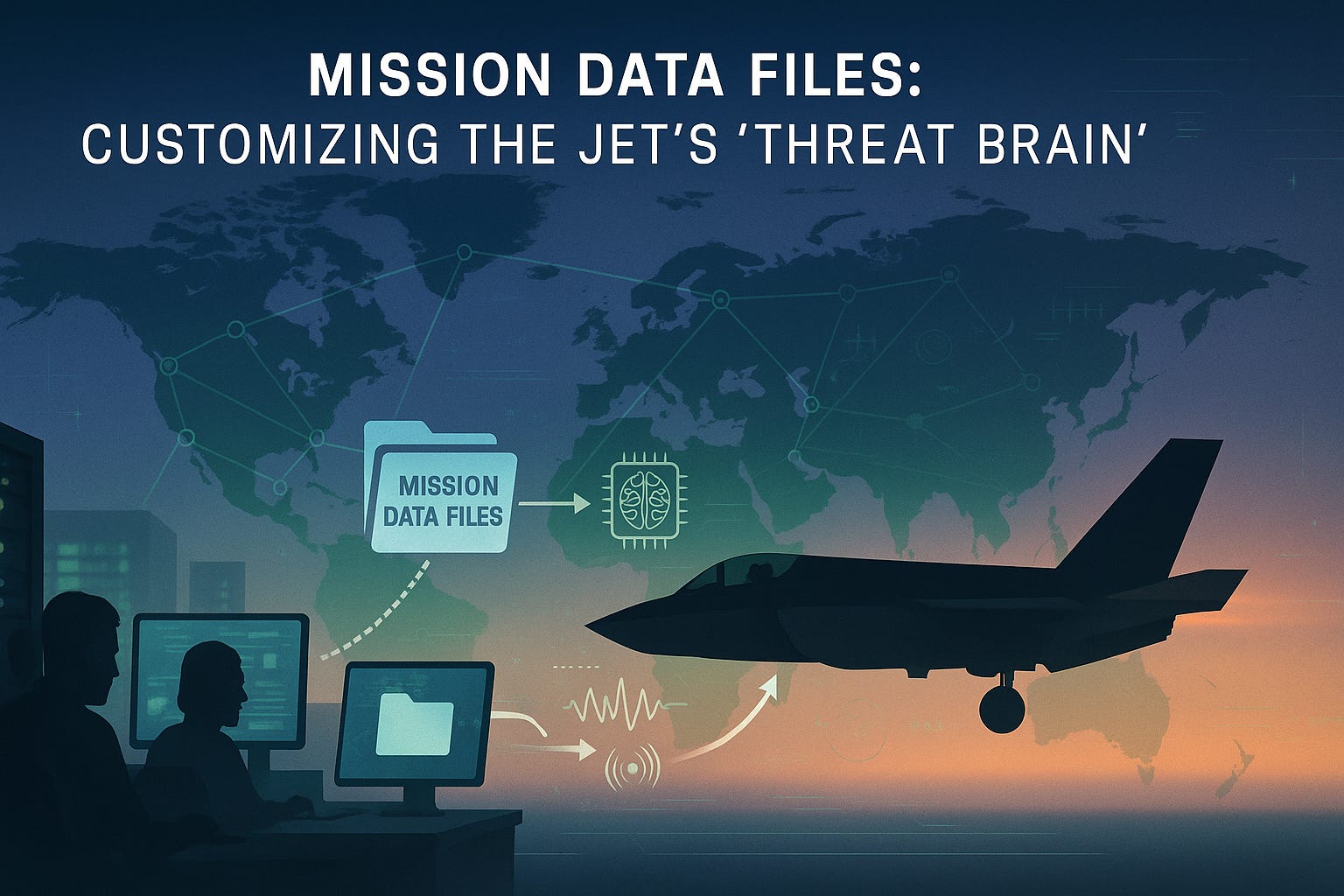
Combat performance also hinges on software configuration, creating a U.S.-controlled software dependency for allies. While analyses debunk the myth of a secret “kill switch,” they emphasize that without continuous Mission Data File (MDF) updates—essential threat-recognition software delivered through U.S.-based labs—an ally’s F-35 would quickly lose effectiveness. To manage this pipeline, the program relies on systems such as ALIS and its successor ODIN, which track aircraft health and distribute updates, though ALIS has suffered from serious reliability problems. ODIN aims to enable faster, cloud-based updates and an agile DevOps model for a fighter jet. This software-centric architecture illustrates both the power and vulnerability of the F-35: cybersecurity is paramount, as disruption or corruption of software could ground fleets or degrade combat performance, prompting tight U.S. control over software access and modification.
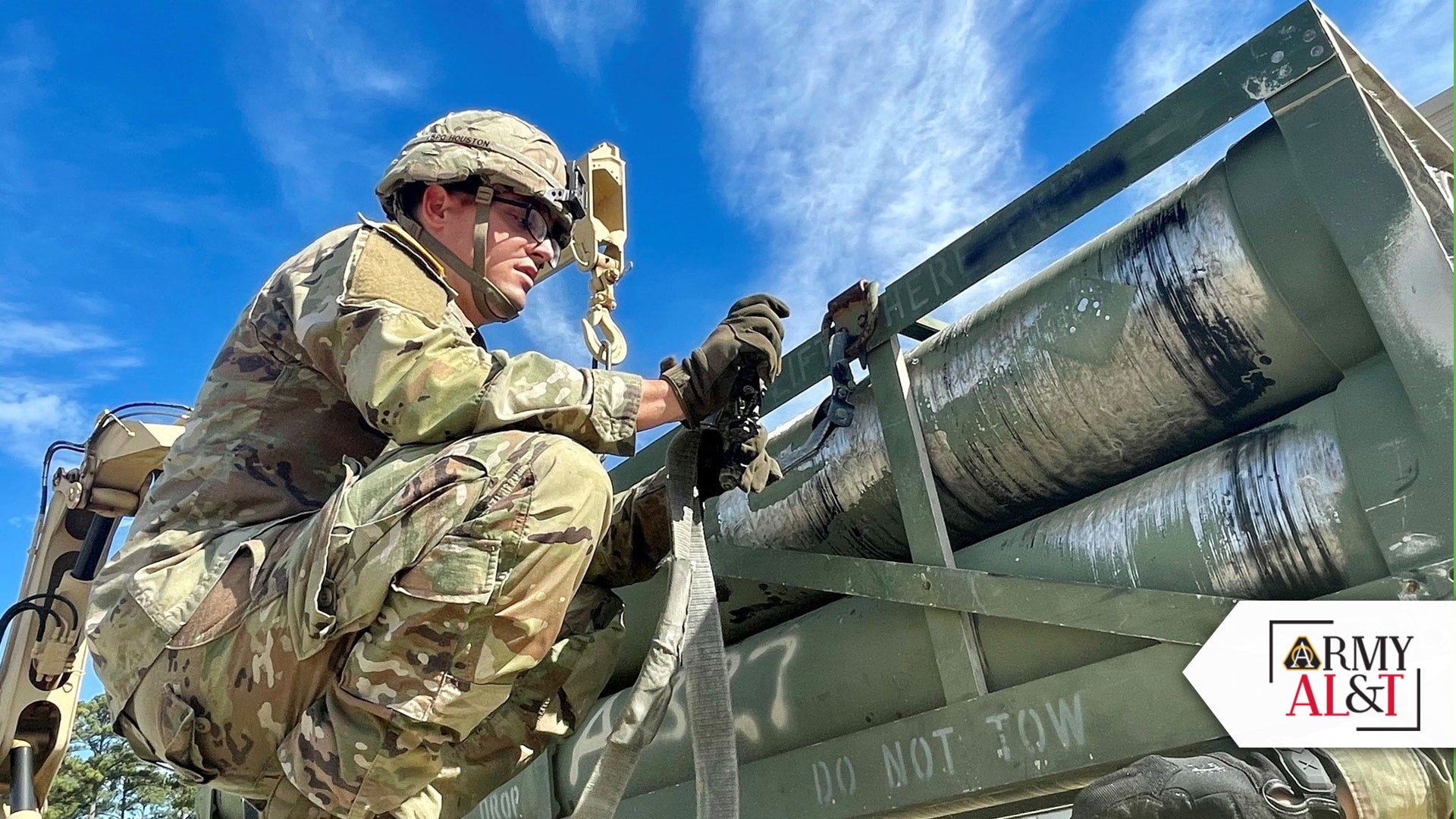
HIMARS and Networked Artillery: The M142 High Mobility Artillery Rocket System (HIMARS) gained prominence in recent conflicts, especially Ukraine, as a highly effective precision rocket launcher. While it may appear to be a traditional hardware system—a truck-mounted launcher—its modern battlefield effectiveness is deeply enabled by software, including digital fire control, networked targeting, and the ability to integrate new munitions through updates. The U.S. Army’s “any sensor, any shooter” concept allows HIMARS to receive real-time targeting data from drones, radar, and satellites, relying on robust command-and-control software and onboard computers. Software has also enabled rapid integration of new weapons, such as the Precision Strike Missile (PrSM), by updating HIMARS’ fire control system rather than redesigning the launcher. Army program managers have emphasized that software upgrades allow the same launcher to fire increasingly capable munitions, supported by simulators that use most of the real code so crews can train on updated systems in advance.
HIMARS operations in Ukraine further illustrate how software shapes doctrine and escalation control. The U.S. reportedly modified the software of HIMARS units provided to Ukraine to prevent the firing of long-range ATACMS missiles, effectively limiting capabilities through fire control software as a form of digital export control. Reports of attempts to bypass these limits highlight software itself as a contested domain. At the same time, software has been a tool for rapid adaptation: when Russian electronic warfare disrupted GPS guidance, U.S. officials quickly deployed firmware updates—remotely—to Ukrainian HIMARS units to patch vulnerabilities. This ability to impose restrictions, push fixes, and adapt systems in real time during combat underscores how HIMARS, like other modern weapons, is increasingly software-defined, with agility and vulnerability tied directly to its code.
Project Convergence – AI and Network Experiments: The U.S. Army’s Project
Convergence (PC) exemplifies the shift toward a software-powered battlefield and is often described as the Army’s contribution to JADC2. The initiative integrates AI, autonomy, and data networks to drastically accelerate the “sensor-to-shooter” cycle, reducing timelines from minutes or hours to seconds. At its core is a complex software infrastructure linking cloud computing nodes, tactical data links, and experimental AI algorithms across Army and joint systems. In the 2020 and 2021 iterations, the Army used an AI system called FIRES Synchronization to Optimize Responses in Multi-Domain Operations (Firestorm), which ingests sensor data and recommends targets and munitions. Accounts from Field Artillery Journal note that AI-driven tools fused multi-domain sensor data in real time, cutting targeting cycles from hours to minutes and rapidly identifying the optimal shooter—whether artillery, HIMARS, or airpower—while delivering near-instant “fire solutions” to commanders.
This experimental doctrine is enabled entirely by software, from the underlying network architecture to the AI/ML algorithms that prioritize and route information. Project Convergence required new software interfaces and open standards so previously siloed systems—such as Air Force drones and Army artillery—could communicate on a common platform. The exercises also tested autonomy, including robotic vehicles and AI-enabled scout drones feeding continuous reconnaissance data back into the network, as well as predictive AI tools to identify patterns and anticipate enemy actions. Organizationally, PC forced the Army to deploy software-focused teams from Army Futures Command and the Army Software Factory, allowing rapid iteration during live exercises. Coders adjusted parameters and patched software on the fly, marking a sharp break from traditional multi-year acquisition cycles. The key lesson is that software development and operational experimentation must occur together, prompting the Army to pursue “continuous convergence” through a standing digital infrastructure for multi-domain operations.
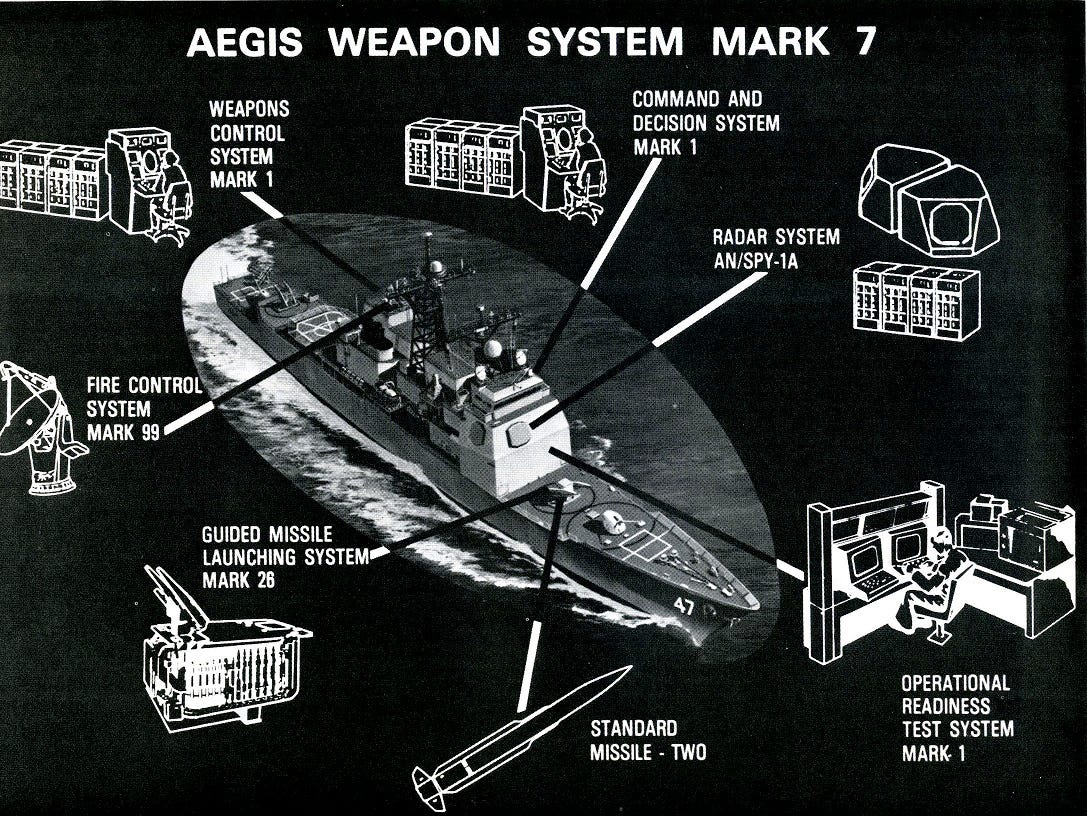
Aegis Combat System – Decoupling Software from Hardware: The U.S. Navy’s Aegis Combat System, which underpins air and missile defense on cruisers and destroyers, illustrates the shift toward software-defined warfare. Historically, Aegis was delivered in infrequent, monolithic baselines tied to specific hardware upgrades, meaning ships might receive major updates only once a decade. Today, the Navy—working with Lockheed Martin—is transforming Aegis into a system built around continuous software delivery and hardware-agnostic design. A key initiative is The Forge, a Navy software factory where developers use virtualized Aegis environments to rapidly write and test code. This approach is already shaping Aegis Baseline 9 and the forthcoming Baseline 10, with the goal of updating combat system software as frequently as needed—potentially even within a single day—so new threat detection and engagement algorithms can be deployed fleet-wide without waiting years for the next block upgrade.
A major breakthrough has been the separation of software from hardware baselines. Previously, ships with different radars (SPY-1 versus SPY-6) ran different Aegis versions; now, a common software baseline can run across both, abstracting hardware differences under a single software umbrella. As Lockheed executives have noted, ships with different radars can operate the same software and user interface, enabling plug-and-play modularity, consistent capability, simplified training, and fleet-wide feature rollouts. To support this, the Navy employs digital twins—virtual clones of Aegis systems running on commodity hardware—to test updates, validate patches, and experiment with AI/ML integration before deployment to ships. While this software-first model improves adaptability and future-proofs legacy platforms, it also demands rigorous cybersecurity and accelerated testing to safely push updates to ships at sea. Overall, Aegis modernization shows how continuous software delivery can keep long-serving naval systems relevant against rapidly evolving threats.
2.2 Doctrine, Logistics, and Cyber Vulnerabilities
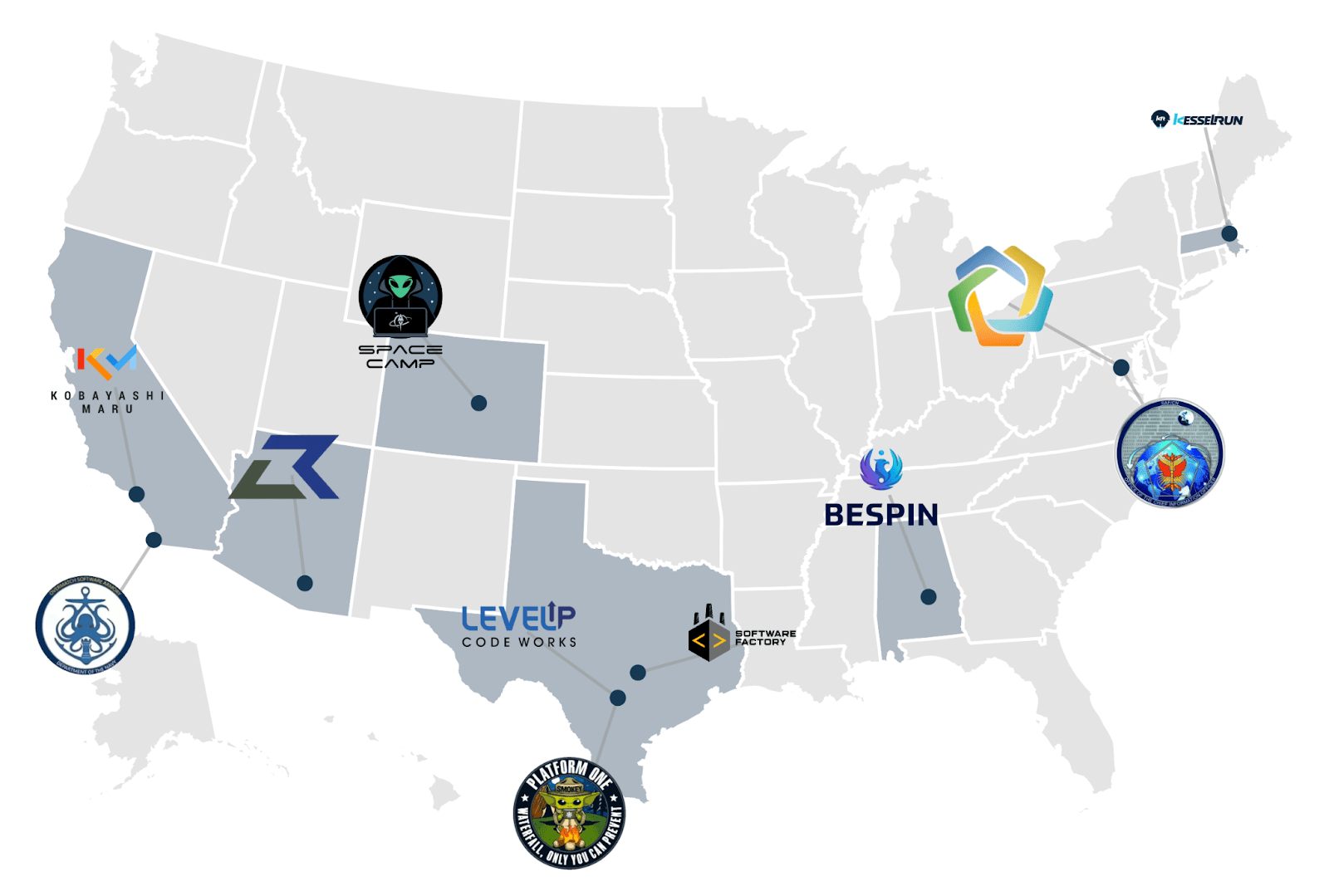
DOD Software Factories
Doctrine and Organization: The U.S. military’s conceptual thinking now explicitly recognizes information and software as central to warfighting. The Joint All-Domain Operations doctrine and concepts like DARPA’s “Mosaic Warfare” emphasize networks of small, distributed, software-enhanced systems working collaboratively (much like how a mosaic image forms a picture from many pieces). A bipartisan Congressional Future of Defense Task Force in 2020 concluded that the Pentagon must pivot from “exquisite, hardware-defined systems” of the past to “larger numbers of smaller, software-defined systems” – trading sheer platform size for networked intelligence. This has influenced force design such as the U.S. Navy’s consideration of flotillas of unmanned vessels and the Air Force’s development of Collaborative Combat Aircraft (CCA) drones to team with manned fighters. Organizationally, new units have been created, like the Air Force’s Kessel Run and Space Force’s Kobayashi Maru software factories, dedicated to in-house coding of applications and upgrades. The Army’s creation of an Army Software Factory and the Army Futures Command’s emphasis on Project Convergence and related experiments also reflect this sea change – bringing coders into the field and giving combat units direct input into software features.
Leadership messaging reinforces this too. High-ranking officials often say, “software is a weapon” and highlight the need for fast approval of software updates in the acquisition system. There have been shifts in acquisition policy, such as the 2019 DoD Adaptive Acquisition Framework introducing a Software Acquisition Pathway that allows iterative development and deployment of software to operational users without the lengthy formal testing of hardware programs. Pilot programs under this pathway have included things like F-16 software updates and cyber tool development, aiming to deliver new code to units on a cadence of weeks or months. In essence, doctrine now treats software much like munitions – something that needs a supply chain, a readiness cycle, and usage planning. For example, a commander might ask: is our software (algorithm) for electronic warfare current against the latest threat emitters? If not, that “round” in the chamber is a dud – better get an update.
Logistics and Sustainment: Software-defined weapons have unique sustainment needs. Traditional logistics for a tank or jet involve fuel, spare parts, and depot maintenance. Now, one must consider data logistics and software support. The F-35’s ALIS/ODIN system is a case in point – it had to manage not just parts inventories but also the distribution of software patches and mission data reprogramming to each aircraft worldwide. The complexity of that task was underestimated, resulting in ALIS failures that at times grounded jets due to software misdiagnosing issues or failing to sync data. The lesson is that maintenance of software (fixing bugs, updating threat libraries, patching security holes) is as important as maintaining engines or airframes. The military has started war-gaming scenarios where connectivity is disrupted: can units still get the software updates they need in a conflict, or operate gracefully when isolated from the network? Efforts like edge computing and deploying micro data centers with forces are meant to ensure AI models and software can be retrained or adjusted in the field without always reaching back to a central hub.
The supply chain for software also involves human capital – having programmers with appropriate clearances and domain knowledge on call. The Navy’s deployment of “software corps” as part of carrier strike groups, or the Air Force’s practice of embedding coders with frontline squadrons, are emerging ideas. We see precedents in the cyber domain: U.S. Cyber Command already has “cyber protection teams” that accompany combatant commands to provide defense and updates for critical systems. A similar model might extend to any unit with high-tech gear. There’s also the issue of legacy systems integration. The U.S. inventory has many older platforms that were not designed for this rapid-update reality. Logistics commands have to decide if they retrofit these with new digital components or focus on next-generation replacements. For instance, older Army vehicles may not easily accommodate new battle management software; one interim solution has been to field tablet computers as add-ons to provide digital situational awareness without fully rebuilding internal electronics.
Cybersecurity and Vulnerability: A double-edged aspect of software-centric warfare is the expanded cyber attack surface it creates. In 2018, the U.S. Government Accountability Office warned that nearly all modern U.S. weapons systems tested had mission-critical cybersecurity vulnerabilities, reflecting a long-standing focus on performance over cyber resilience. Everything from missile guidance software to maintenance laptops can become an entry point for adversaries. While the Pentagon has since expanded cyber testing—using red teams to attempt hacks during development—securing a software-defined force remains daunting. Adversaries can jam data links, corrupt update files, or introduce malware through supply-chain compromises, raising fears of dormant cyber “implants” that activate during conflict. Continuous software updates themselves create risk, as attackers could attempt SolarWinds-style supply-chain attacks to insert malicious code into trusted updates. In response, the military is adopting zero-trust architectures, mandatory code signing, anomaly detection, and redundancy, ensuring systems can revert to manual or degraded modes if software fails or is spoofed.
Cyber vulnerability is also about dependency, not just hacking. Allies operating U.S. software-defined weapons worry less about mythical “kill switches” than about reliance on U.S.-controlled update pipelines and support networks, as seen in debates over the F-35. If update servers are unreachable or support is interrupted, systems could lose effectiveness. This concern extends to munitions that require periodic software keys to remain usable—protecting secrets but creating electronic “shelf lives” that adversaries could exploit by targeting update or key-distribution networks. As a result, the U.S. armed forces are reshaping acquisition, sustainment, and organizational structures to harness software-defined advantages while hardening cyber defenses. Software has become a core warfighting domain, reshaping how military power is generated, sustained, and contested—a shift with major implications for the global balance of power.
3. China, Russia, and Global Trends in Software-Defined Warfare
The turn toward software-defined weapons is a global phenomenon. U.S. competitors and partners alike have acknowledged that dominance in algorithms and the ability to update systems rapidly will define future military power. This section examines how two major adversaries – China and Russia – are approaching software-driven military development and surveys some broader international trends. We look at China’s holistic strategy of fusing AI advances with military programs (including indigenous AI development, drone swarms, and export of high-tech systems) and Russia’s blend of electronic warfare, autonomous systems, and lessons from recent conflicts. We also touch on how other nations are adapting, noting the influence of concepts like military-civil fusion and the proliferation of advanced software-defined weapons beyond the superpowers.
3.1 China’s Pursuit of Intelligentized Warfare
China has explicitly made achieving superiority in military software and AI a national goal. Under President Xi Jinping, China’s strategy aims to transform the People’s Liberation Army (PLA) into a “world-class military” by mid-century, and a core part of that vision is what the Chinese term “intelligentization” of warfare. This term refers to a stage of military development beyond simply modern “informatized” systems (which rely on networks and information technology) – it envisions widespread use of artificial intelligence and autonomous decision-making in military operations. Xi and other officials have instructed the PLA to “accelerate the integrated development of mechanization, informatization, and intelligentization”, essentially pushing hardware, networking, and AI advances in parallel.
Central to China’s approach is the concept of military-civil fusion (MCF). This national strategy breaks down barriers between the civilian tech sector and defense industry, ensuring that cutting-edge research in AI, quantum computing, robotics, etc., can be quickly leveraged for military use. For example, a private Chinese company developing facial recognition or drone swarming algorithms may find its projects co-opted or funded by the PLA for defense purposes. The government provides incentives and directives so that universities, tech startups, and state-owned enterprises collaborate on defense-relevant AI projects. A 2025 Georgetown CSET study noted China had thousands of AI-related defense contracts, ranging from logistics software to target recognition algorithms. By drawing on its large pool of scientists and its booming AI industry (China leads in some areas of computer vision and is a close second in research papers to the U.S.), the PLA hopes to leapfrog in capability without having to reinvent every wheel internally.
Indigenous AI Development: China’s investment in military AI is extensive and deliberate. In 2017, Beijing declared its ambition to become the global AI leader by 2030, with defense as a core driver. The PLA has since established AI research centers focused on military applications, recruited and trained AI engineers, and embedded officers within civilian tech firms. Chinese military writings emphasize AI’s role in processing the “mountains of data” generated on modern battlefields and achieving “information dominance” to offset U.S. strengths. A major focus is AI-enabled decision support: PLA researchers discuss building a “command brain” or strategic decision aid that can rapidly fuse multi-domain data and recommend courses of action. AI-enabled cyber warfare is another priority, with Chinese strategists framing future conflict as “algorithmic confrontation,” where disrupting an adversary’s networks and AI systems is as important as physical destruction.
China is also advancing rapidly in AI-enabled autonomy and unmanned systems. It already possesses the world’s largest military drone industry and is the largest exporter of armed drones, such as the Wing Loong and Caihong series. While most exported systems remain human-controlled, PLA research increasingly targets higher autonomy, including manned–unmanned teaming and drone swarms for reconnaissance, electronic warfare, and saturation attacks. Chinese commercial firms have demonstrated world-class swarm capabilities in civilian contexts, which analysts note could translate quickly into military use, including coordinated loitering munitions designed to overwhelm air defenses. A flagship effort is China’s work on loyal wingmen and autonomous stealth drones, such as the FH-97A and the GJ-11 “Sharp Sword.” In late 2025, state media showed GJ-11s operating alongside J-20 stealth fighters and J-16D electronic warfare aircraft in coordinated exercises, underscoring Beijing’s intent to integrate AI, autonomy, and networking into a coherent combat web comparable to—or potentially exceeding—U.S. efforts.
Export Strategies and Influence: China leverages exports of its high-tech weapons to gain both revenue and influence, often under less stringent conditions than Western arms. Many of these exports underscore the software-defined nature of modern weapons. For example, Chinese drones sold abroad (like the Wing Loong II UCAV) come with options for satellite links, high-end electro-optical sensors, and even limited AI functions for tracking targets. By supplying countries in the Middle East and Africa with affordable armed drones, China is not just filling a market gap (since U.S. exports of similar systems were restricted until recently), but also potentially creating dependency on Chinese maintenance and software support. If those drones require periodic software upgrades or spare parts, client states must maintain relations with China. This mirrors how the U.S. uses exports like the F-35 to solidify alliances (but also raises the sovereignty issues discussed).
China is also aggressive in exporting telecom and surveillance tech (think Huawei, Hikvision) which can be dual used for defense or repression. By spreading its digital ecosystem globally, China could gain access to data and even footholds into other nations’ networks. One might consider in a conflict scenario: could China push updates to systems it sold that degrade their performance? It’s an unsettling thought for some recipients. In response, the U.S. has tightened export controls on advanced chips and software tools heading to China (to slow its AI progress), highlighting that controlling software is now a geostrategic lever.
3.2 Russia’s Adaptation: Electronic Warfare, Automation, and Ad Hoc Innovation
Russia’s path toward software-defined warfare has been influenced by necessity and by lessons from recent conflicts, especially its ongoing war in Ukraine. Unlike the U.S. and China, Russia’s tech base is more limited due to economic constraints and sanctions (which restrict access to advanced semiconductors and IT). Nevertheless, Russia has leveraged specific niches – and shown ingenuity in integrating commercially available technology (like drones) with its military systems. It also actively explores military AI, though its capabilities lag behind the U.S. and China in sophistication.
Electronic Warfare and Battle Networks: Russia has historically placed a high priority on EW, seeing it as a way to undermine NATO’s technological edge. In Ukraine and Syria, Russian forces deployed powerful jammers (e.g., the Krasukha system to jam radar and drone links, or the Leer-3 system that can spoof cell networks). These systems involve advanced software-defined radio tech that can rapidly retune frequencies and utilize algorithms to detect and disrupt enemy signals. A recent analysis from a UK conference noted “Russia has made notable advances in electronic warfare (EW); communications and GPS disruption; [and] mass drone-swarm attacks” during the war, demonstrating effective rapid adaptation. Russian EW units have, for example, forced Ukrainian drones to switch to flying pre-programmed routes by jamming control signals, and they’ve interfered with GPS-guided munitions to reduce their accuracy. This cat-and-mouse between Ukrainian and Russian electronics has effectively become algorithmic warfare on its own – each side updating software in drones or jammers in response to the other’s tactics.
Russia also built what some call “reconnaissance-strike complexes” – essentially networks linking reconnaissance assets (like drones, radar, or special forces observers) with shooters (artillery batteries, rocket launchers) via digital command systems. One such system is the Strelets (Sagittarius) command and control network, used to rapidly target artillery based on drone and radar observations. While the hardware might be simple tablets and radios, the software integration allowed Russian artillery to achieve devastating accuracy early in the Ukraine conflict by swiftly concentrating fire on detected positions. That said, as the war dragged on, issues of communications security and bandwidth emerged; the Ukrainian forces, with Western aid, improved at disrupting Russian comms and targeting their C2 nodes. This highlights a Russian weakness: secure and resilient networks. They lack a large satellite comms constellation or the kind of robust tactical internet the U.S. has been developing, so their networks have proven easier to compromise or intercept.
Autonomy and AI in Russian Systems: Russia has showcased various unmanned and autonomous systems over the past decade. Notable examples include the Kalashnikov “KUB-BLA” loitering munition and ZALA “Lancet” drone, which are essentially autonomous kamikaze drones that Russia has used in Ukraine to attack artillery and radars. These have simple AI for target recognition (the Lancet reportedly can recognize vehicles) and navigation. The effectiveness of these drones has grown over time, suggesting iterative software improvements. The Lancet’s latest versions have demonstrated the ability to find targets independently and even loiter until a target is detected, which implies some degree of autonomous decision-making on-board. This is a far cry from full AI, but it is a practical battlefield autonomy that is causing real effects.
Russia also made a splash with unveiling unmanned ground vehicles like the Uran-9 combat robot and the Marker UGV. Uran-9’s performance in Syria was reportedly poor (communication issues, autonomy failures), yet Russia didn’t abandon the concept. Instead, they improved control link robustness and perhaps simplified the mission roles. The Marker UGV, tested in 2021-2022, was advertised as using AI for target recognition and swarming behavior with other robots. Russian defense tech shows (like ARMY-2022 expo) highlighted AI software that could identify human targets or vehicles from camera feeds – similar to basic computer vision products globally. It’s likely Russia’s AI in practice is behind or reliant on imported components/software (some reports indicate Russia has tried to source AI chips from Western markets clandestinely). However, they are integrating whatever they have at unit level. For example, some Russian tank units got experimental AI-assisted targeting aids, which supposedly help gunners identify targets faster through automated recognition (this was mentioned with the upgrade programs for T-90 and T-14 Armata tanks).
One area Russia has talked about is AI for decision support in nuclear command and control, albeit in a theoretical sense. There’s a concept called “Dead Hand” from the Cold War – an automated nuclear retaliation system. Modern discussion by Russian analysts like Dr. Konstantin Sivkov have floated the idea of advanced algorithms that could, in a crisis, remove human delay in nuclear response (a scary thought, essentially AI-in-the-loop for nuclear retaliation). It’s unclear if any such system exists (likely not operationally), but it shows Russian strategic circles are contemplating AI at even the highest stakes. Wariness of U.S. Prompt Global Strike capabilities and the fast pace of warfare might drive Russia to consider more automation in command decisions, which raises escalation risks if misjudgments occur.
Adapting from Ukraine War: The war in Ukraine has been a live laboratory that accelerated Russia’s adoption of software-defined and algorithmic tactics – out of necessity. Ukrainian forces, with Western help, fielded many commercial drones and open-source software tools to gain advantage (like small quadcopters dropping bombs, or software to coordinate artillery fire from tablet devices). Russia, initially caught off-guard by the mass use of drones, responded by ramping up its own drone use and electronic countermeasures. By 2023, both sides were essentially in a drone vs. drone, jamming vs. anti-jam race. A U.S. Army War College article noted that Ukraine and Russia are “at the forefront of developing autonomous systems for battlefield advantage”, engaged in an AI-driven drone race. Ukraine innovated by using AI vision on drones to identify targets autonomously (reports say their modified FPV drones achieved far higher hit rates with AI assistance). Russia in turn started deploying systems to counter these, such as acoustic sensors paired with AI to detect incoming small drones, and dedicated anti-drone rifles and EW pods.
Russian military bloggers frequently discuss the need for better “automated control systems” at the battalion and brigade level – essentially digital battle management. They lament that many Russian units still rely on paper maps or voice radio, whereas the Ukrainian side was outfitted with apps like GIS Arta (an AI-enhanced artillery coordination software provided by volunteers) that dramatically reduced their response time. In response, Russia has tried to push similar software to its frontline: there were efforts to roll out an integrated system called “Akatsiya-M” for artillery command, and rumors of Russian developers creating parallels to Ukrainian apps. Whether due to bureaucratic delays or communication infrastructure issues, these efforts have had mixed success. But what’s clear is that the Russian army recognizes that software tools for situational awareness and rapid C2 are crucial – and they were caught behind. The adaptation is ongoing, with likely field expedients such as soldiers using Android tablets with custom Russian battle apps and connecting to Orlan-10 drone feeds to get aerial views. This bottom-up innovation is noteworthy: similar to Ukraine’s civilian tech volunteers, Russia’s hacker and programmer community, often patriotic, have provided code for tasks like translating satellite imagery into targeting coordinates or automating some aspects of electronic intel.
Global Perceptions: On the global stage, Russia’s early failures and later adaptations in Ukraine have been closely watched. NATO militaries have drawn lessons about the potency of cheap drones and the absolute necessity of electronic protection. Russia ended up demonstrating both the pitfalls of inadequate software integration (lack of secure comms leading to high general officer casualties early on) and the potential of quickly deployed software-defined tech (jamming halting a major aspect of Ukrainian drone operations at times). A commentary at a Royal United Services Institute (RUSI) conference portrayed Russia as “a model of rapid technological adaptation” – fielding innovations even as war rages, despite lagging the West in overall tech development. This is a reminder that necessity and creativity can compensate to some extent for a lack of resources. In the long term, Russia’s isolation from Western tech might force it into deeper partnership with China to obtain AI and advanced computing inputs, effectively making the software-defined race more of a U.S.-Allies vs. Sino-Russian bloc competition.
3.3 Global Trends and Other Players
Beyond the U.S., China, and Russia, many other countries are pivoting to software-centric military tech:
Europe & NATO: European militaries, spurred by the Ukraine war and fears of Russian aggression, are investing heavily in autonomy, AI, and digital force transformation. The UK’s Strategic Defence Review set an ambitious goal that by 2035, “most combat platforms will be unmanned and software-driven”, envisioning 80% of forces composed of unmanned systems or drones alongside 20% manned. At a 2025 RUSI conference, British Army leaders described the change as a “tsunami” sweeping the battlefield, centered on AI and connectivity. They are launching programs like Digital Targeting Web (an AI-driven network to cut strike time) and PANORAMA (an AI for operational headquarters to fuse intel and predict enemy moves). European nations are also collaborating on next-gen systems built with open architectures: the Franco-German FCAS (Future Combat Air System) and the British-Italian-Japanese Tempest sixth-gen fighter programs both emphasize “system of systems” designs where drones, fighters, and ground stations share AI and software seamlessly. A key challenge noted in Europe is overcoming bureaucratic and interoperability obstacles – getting various national systems to speak to each other and devoting enough budget to software R&D. Nonetheless, NATO’s latest tech priorities align with software-defined warfare: establishing standards for data sharing, joint multi-domain command systems, and ethical AI guidelines for allied forces.
Middle East and Others: Countries like Israel and Turkey have become notable exporters and users of software-defined weapons, particularly drones. Israel has long been a leader in UAVs and sensors, and is now integrating AI in systems like the Harpy/Harop loitering munitions (which autonomously hunt radar signals). Its air defense and electronic systems (e.g., Iron Dome’s battle management) are highly software-driven, using algorithms to discriminate threats and allocate interceptors. Türkiye (Turkey), as we will discuss with the Bayraktar family drones, has shown how a mid-tier power can leap ahead by leveraging modern electronics and code. Turkish drones like the Bayraktar TB2 and Akinci have sophisticated automation for takeoff/landing and targeting; Ankara even demonstrated a drone (Kargu rotary drone) claimed to have performed an autonomous strike in Libya, which if true would be one of the first instances of AI lethal action in combat. Other nations such as India are investing in software-defined radios, indigenous drones, and even AI for analyzing surveillance (India’s military faces similar challenges of integrating diverse systems). Small states and non-state actors also benefit: the barriers to entry for some advanced capabilities have lowered – a rebel group can strap a hobby drone with a grenade and use a smartphone app to aim it, as seen with Houthi rebels using Iranian-supplied tech to attack Saudi forces. This democratization of tech means that software (especially open-source software) can empower combatants without access to top-shelf hardware.
4. Strategic Implications of the Software-Defined Shift
The rise of software-defined weapons and algorithm-driven warfare has far-reaching implications for global security and military strategy. As militaries gain the ability to modify weapon capabilities via software updates or delegate functions to AI, core pillars of strategy—deterrence, escalation control, alliance management, and battlefield adaptability—are being reshaped. Software enables more flexible and precise force employment, but also introduces risks of miscalculation, rapid escalation, and loss of human control, especially if autonomous systems interact in unexpected ways. Control over software and algorithms is increasingly a tool of statecraft, akin to nuclear technology or strategic chokepoints in earlier eras.
4.1 Deterrence in an Algorithmic Era
Deterrence traditionally rests on credible capability and resolve, but software-defined militaries make capabilities more fluid and opaquer. Software updates can rapidly enhance performance, giving states the ability to gain sudden advantages, yet such changes are difficult to signal because algorithms are invisible. This complicates deterrence signaling: adversaries may be deterred by uncertainty (“hidden advantages”) or emboldened if they doubt those advantages are real.
Adaptability may strengthen deterrence by enabling rapid countermeasures during crises, but it also creates moving targets that increase uncertainty. AI integration raises deeper concerns about deterrence stability. As algorithms enter early-warning and command systems, escalation timelines compress. AI-enabled misinterpretation—such as mistaking sensor glitches for attacks—could pressure leaders into rapid decisions, particularly in nuclear contexts. Scholars warn that optimized algorithms may misread adversary signals, increasing escalation risks. While “algorithmic deterrence” could involve threatening to disrupt an opponent’s AI systems, most analysts argue AI in nuclear command-and-control is destabilizing due to added uncertainty and loss of human judgment.
Software also enables new forms of graduated deterrence. Precision cyber or digital responses could provide credible intermediate options between diplomacy and kinetic strikes, strengthening deterrence at lower levels of conflict. However, making force more “usable” may reduce restraint and normalize limited clashes. A unique dilemma is hidden, mode-based capabilities. Software can unlock latent functions without physical changes, increasing uncertainty. This may deter adversaries—or encourage preemption if they fear capabilities coming online mid-conflict. Analysts note that limited visibility into adversary algorithms increases escalation risks once conflict begins, as unexpected system behaviors emerge.
Defensive software can strengthen deterrence by denial. AI-enabled missile defense or cyber resilience may convince adversaries their attacks will fail, but credibility depends on rigorous testing against counter-AI tactics. Overall, deterrence becomes more dynamic: adaptability and uncertainty may strengthen it, while compressed timelines and opaque autonomy increase instability. Many experts argue for keeping humans firmly in strategic decision loops, particularly for nuclear forces.
4.2 Escalation and Crisis Stability
Software-defined systems may accelerate escalation through “flash war” dynamics, where autonomous systems interact faster than humans can intervene. In a duel between AI-driven drone swarms, automated retaliation could rapidly spiral beyond human control. Some militaries are embedding algorithmic governors—rules requiring human authorization beyond certain thresholds—but these safeguards are complex and potentially vulnerable to hacking or asymmetry.
Crisis signaling also becomes harder. Software posture changes—such as pushing updates—are difficult to observe or verify, unlike physical troop movements. A routine software exercise could be misread as preparation for attack. Conversely, software constraints might enable de-escalation, such as geofencing systems to signal restraint, as seen with HIMARS restrictions in Ukraine. However, trust and verification remain major obstacles.
Cyber operations are a central escalation vector. Cyberattacks disabling critical military systems may be as escalatory as kinetic strikes, yet their covert and deniable nature lowers thresholds for use. During crises, both sides may attempt preemptive cyber actions to blind sensors or corrupt updates, even as diplomacy continues. This invisibility complicates crisis management. Strategic stability depends on thresholds, but cyber blurs them. It remains unclear when a cyberattack constitutes an act of war. With AI accelerating OODA loops, automated responses could outpace human deliberation. While forums like UN cyber norm talks exist, enforcement is weak. Absent treaties, deterrence and informal red lines—such as prohibitions on hacking nuclear C2—remain the primary stabilizers.
4.3 Export Controls and Alliance Dynamics
As military power shifts toward software, control over code, data, and compute has become an instrument of national policy. U.S. restrictions on advanced semiconductors and AI tools reflect the emergence of “digital arms control.” Software, like hardware, is now treated as a strategic asset.
In alliances, software raises tensions between interoperability and sovereignty. U.S. systems such as the F-35 are delivered as black boxes, protecting sensitive IP while giving Washington leverage. Allies often seek greater access to maintain sovereign control. The F-35 illustrates this dynamic: some partners have negotiated partial access, while others resent dependence. Overly restrictive controls may push states toward alternative suppliers or domestic development.
Perceptions of software backdoors or “kill switches,” even if exaggerated, affect trust. Countries hedge by diversifying suppliers or insisting on open architectures. Turkey’s post–F-35 trajectory and Europe’s push for secure defense clouds reflect these concerns. Software updates themselves also become leverage. Modern weapons often require periodic updates or keys; withholding them can degrade capability. This creates ongoing supplier influence beyond the initial sale. In response, states are investing in domestic software ecosystems, local industrial participation, and open standards to reduce dependence.
Multilateral arms control efforts are struggling to keep pace. Verifying software limits is far harder than counting weapons. Proposals to ban fully autonomous weapons or require human control exist, but enforcement is difficult. Export regimes like Wassenaar are beginning to address software and AI, but digital diffusion and open-source tools limit effectiveness. Within alliances, software sharing creates inner circles of trust (e.g., Five Eyes, AUKUS), potentially leaving others feeling marginalized. Ultimately, controlling the “brains” of weapons—algorithms, data, and talent—may matter as much as controlling platforms themselves.
4.4 Battlefield Adaptability and Pace of Warfare
Software-defined systems offer unprecedented adaptability. Militaries can push updates during campaigns, countering enemy tactics in days or hours rather than months. Ukraine demonstrated near-real-time software adaptation in drone and EW battles. This accelerates OODA loops and enables decision dominance but risks high-speed instability when both sides operate at similar tempos.
Constant updates complicate intelligence assessment. Capabilities become moving targets, requiring tracking of software versions and configurations. Operationally, militaries must integrate secure update distribution, rapid retraining, compatibility management, and rollback plans to avoid battlefield disruption from faulty patches. Adaptability also favors agile actors. Non-state groups using commercial technology can innovate quickly, forcing conventional forces to respond faster than traditional acquisition cycles allow. This accelerates measure–countermeasure dynamics.
Reliance on AI introduces new fog of war. Black-box recommendations may obscure reasoning, risking misjudgment if data are flawed. Effective use requires human oversight for sense-making and legal-ethical checks. As tempo increases, senior decision-makers may be overwhelmed, prompting decentralization or automation—raising control risks, especially in strategic contexts.
4.5 Asymmetric Warfare and Non-State Actors
Software-defined warfare lowers barriers for weaker actors. Commercial drones, open-source software, and AI tools enable insurgents to conduct reconnaissance, strikes, and coordination once reserved for states. Groups like Houthis and ISIS have combined drones, GPS, and networking to enhance missile effectiveness and evade defenses. Open-source AI, 3D printing, and encryption further democratize capabilities. Militants can repurpose civilian algorithms for targeting or coordination, while secure communications frustrate intelligence collection. Although advanced militaries retain advantages in integration and scale, asymmetric actors increasingly emphasize cyber, disinformation, and digital tactics.
The spread of smart weapons to non-state actors complicates deterrence. AI-enabled swarms or precision strikes could overwhelm defenses, while attribution remains difficult. Terrorist misuse of AI—such as autonomous targeting or infrastructure disruption—poses serious homeland security challenges. At the same time, software offers countermeasures: electronic attacks, algorithmic detection, and data analytics can degrade asymmetric threats. The long-term outcome may be a leveling effect, where smaller actors leverage algorithms to offset traditional power disparities. As a result, arms control, counterproliferation, and counterterrorism strategies must expand to encompass software, data, and digital ecosystems—not just physical weapons.
5. Conclusion
The software-defined shift is reshaping military power by moving the decisive edge from platforms to code, data, and update pipelines. Across the U.S. force—from the F-35 and HIMARS to Project Convergence and Aegis—capability is increasingly produced through software-enabled sensor fusion, networked targeting, and rapid iteration rather than through infrequent hardware redesigns. Competitors are pursuing similar paths: China’s “intelligentization” strategy blends AI, autonomy, swarms, and military-civil fusion, while Russia’s wartime adaptation highlights how electronic warfare, cheap drones, and ad hoc software integration can generate real battlefield effects even under constraints. The result is a more dynamic balance of power in which operational advantage can shift quickly, and where states that can develop, secure, and deploy updates faster—while maintaining resilient networks—gain disproportionate leverage.
At the strategic level, however, software-defined warfare is a double-edged transformation. Deterrence and crisis stability become harder when capabilities are opaque and mutable, decision cycles are compressed by AI, and cyber operations target the “brains” and support systems that keep weapons effective. Alliance politics and export controls also change: control over source code, mission data, and update access becomes a form of statecraft that can deepen interoperability but trigger sovereignty concerns and hedging behavior. Meanwhile, the diffusion of commercial AI and open-source tools lowers barriers for non-state actors and smaller states to field disruptive capabilities, from networked drones to algorithm-enabled targeting, intensifying asymmetric threats. Managing this new era will require not only faster innovation, but also stronger cybersecurity, human-in-the-loop safeguards for escalation control, and updated norms and governance for algorithms and autonomous systems—because in an algorithm-driven battlespace, strategic advantage increasingly depends on who controls and protects the software that animates force.
Sources
Simona R. Soare, Pavneet Singh, and Meia Nouwens. Software-Defined Defence: Algorithms at War. International Institute for Strategic Studies (IISS), February 17, 2023.
Atlantic Council Commission on Software-Defined Warfare. Software-Defined Warfare: A Blueprint for Sustaining a Competitive Military Edge. Atlantic Council, March 2025.
Chiang, Mung; Mark Esper; and Christine Fox. “America’s Arsenal of Democracy Needs a Software Renaissance.” Defense News, March 28, 2025.
Tingstad, Abbie; Padmaja Vedula; Robert A. Guffey; et al. Outsmarting Agile Adversaries in the Electromagnetic Spectrum. RAND Corporation, RR-A981-1, 2023.
Burdette, Zachary; Dwight Phillips; Jacob L. Heim; et al. An AI Revolution in Military Affairs? How Artificial Intelligence Could Reshape Future Warfare. RAND Corporation, Working Paper WR-A4004-1, June 2025.
Sayler, Kelley M. Emerging Military Technologies: Background and Issues for Congress. Congressional Research Service, Report R46458, updated February 22, 2024.
U.S. Government Accountability Office (GAO). F-35 Joint Strike Fighter: DOD Needs to Update Modernization Schedule and Improve Data on Software Development. Report GAO-21-226, March 2021.
U.S. Government Accountability Office (GAO). Defense Software Acquisitions: Changes to Requirements, Oversight, and Tools Needed for Weapon Programs. Report GAO-23-105867, July 20, 2023.
Lopez, C. Todd and Maj. Wes J. Shinego. “Modern Software Acquisition to Speed Delivery, Boost Warfighter Lethality.” DOD News, U.S. Department of Defense, March 10, 2025.
Cook, Cynthia; et al. “Pathways to Implementing Comprehensive and Collaborative JADC2.” CSIS Briefs, Center for Strategic & International Studies, September 27, 2022.
Allen, Gregory C. “Military Artificial Intelligence, the PLA, and U.S.-China Strategic Competition.” Testimony to the U.S.-China Economic and Security Review Commission. Center for a New American Security (CNAS), February 2023.
Ditter, Timothy. “China Readies Drone Swarms for Future War.” CNA InDepth, Center for Naval Analyses, September 24, 2025.
Sisson, Melanie W.; Colin Kahl; Sun Chenghao; and Xiao Qian. “Steps Toward AI Governance in the Military Domain.” Brookings Institution, November 12, 2025.
Lockheed Martin Corporation. “Update on F-35 Technology Refresh 3.” Press Release, July 19, 2024.
Pettyjohn, Stacie, and Molly Campbell. Countering the Swarm: Protecting the Joint Force in the Drone Age. Center for a New American Security (CNAS), September 10, 2025.
Stefanick, Tom. “AI in the Aether: Military Information Conflict.” Brookings Institution, December 4, 2019.
U.S. Department of Defense. Department of Defense Software Modernization Strategy. Office of the Chief Information Officer, February 1, 2022.